Buy webleasing.eu ?
We are moving the project
webleasing.eu .
Are you interested in purchasing the domain
webleasing.eu ?
domain@kv-gmbh.de · 0541-91531010
Buy webleasing.eu ?
What are river variables and potential variables?
River variables are physical, chemical, and biological characteristics of a river that can be measured and monitored to assess its health and quality. These variables include parameters such as water temperature, pH levels, dissolved oxygen, nutrient concentrations, and the presence of pollutants. Potential variables are factors that can influence or impact the river variables, such as land use practices, urban development, agricultural runoff, and climate change. Understanding both river variables and potential variables is essential for effective river management and conservation efforts. **
What is the difference between primitive variables and reference variables?
Primitive variables store the actual value, such as numbers or characters, directly in memory. Reference variables, on the other hand, store a reference to an object in memory rather than the actual value. This means that when working with reference variables, you are actually working with the object that the reference points to, while with primitive variables, you are working directly with the value stored in memory. Additionally, primitive variables are allocated on the stack, while reference variables are allocated on the heap. **


Similar search terms for Variables
Top-Angebote
Products related to Variables:
-
Chesapeake Briony Sage Vehicles Wallpaper - 20.9 x 396 x 0.025This playful wallpaper is sure to add a bit of fun to your little one's space! Sage green helicopters, fire trucks, cars and cranes are printed against a crisp white. Briony is an unpasted, non woven wallpaper.92,49 $*Shipping: 0,00 $Secure redirect to the provider
-
Chesapeake Briony Blue Vehicles Wallpaper - 20.9 x 396 x 0.025Add a bit of adventure to your little one's space with this graphic print! Fire trucks, helicopters, cranes, and cars are printed in white against a blue background. Briony is an unpasted, non woven wallpaper.88,49 $*Shipping: 0,00 $Secure redirect to the provider
-
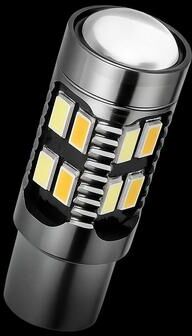
Drop Dash Deals LED DRL Switchback Turn Signal Bulbs Parking Light Indicators For Vehicles LED DRL Switchback Turn Signal Bulbs Parking Light Indicators For VehiclesUpgrade your vehicles lighting system with these 2pcs LED DRL switchback turn signal bulbs, designed to provide both style and functionality. Featuring a unique whiteamber design, these bulbs deliver brighter and more reliable performance compared...54,97 $*Shipping: 0,00 $Secure redirect to the provider



-
What is the difference between ordinal scaled variables and ordinal variables?
Ordinal scaled variables are variables that have a specific order or ranking, but the intervals between the values are not necessarily equal. On the other hand, ordinal variables are variables that have categories with a natural order, but the numerical values assigned to them do not have any meaningful interpretation. In summary, ordinal scaled variables have meaningful numerical values with a specific order, while ordinal variables have categories with a natural order but lack meaningful numerical values. **
-
What are random variables?
Random variables are variables that can take on different values based on the outcome of a random event. They represent the possible outcomes of a random process and are used in probability theory and statistics to quantify uncertainty. Random variables can be discrete, taking on a finite number of values, or continuous, taking on any value within a range. They are essential for modeling and analyzing uncertain situations in various fields such as finance, engineering, and biology. **
-
What are reduced variables?
Reduced variables are a set of transformed variables that are used to simplify the analysis of a system or process. These variables are often obtained by scaling or normalizing the original variables to make them more manageable and easier to interpret. By using reduced variables, complex systems can be analyzed and understood more effectively, leading to better insights and decision-making. **
-
How do I solve an equation with form variables and solution variables?
To solve an equation with form variables and solution variables, you first need to isolate the solution variable on one side of the equation. This involves performing the necessary operations (addition, subtraction, multiplication, division) to move all other variables to the other side of the equation. Once you have isolated the solution variable, you can then solve for it by performing any additional operations needed to simplify the equation. Finally, you can substitute the solution back into the original equation to verify that it satisfies the equation. **


What is a local variable and what is the difference to instance variables, class variables, and normal variables in Java?
A local variable in Java is a variable that is declared within a method, constructor, or block of code and is only accessible within that specific scope. It is temporary and exists only for the duration of the method execution. The main difference between local variables, instance variables, class variables, and normal variables in Java is their scope and lifetime. Instance variables are declared within a class but outside of any method and are accessible to all methods within the class. Class variables are declared with the static keyword and are shared among all instances of a class. Normal variables refer to any variable that is not a local, instance, or class variable. **
How can variables be shortened?
Variables can be shortened by using abbreviations or acronyms that still clearly represent the data they are referring to. Another way to shorten variables is by using single letters or short phrases that convey the meaning of the data. It is important to strike a balance between shortening variables for efficiency and ensuring that they remain understandable and meaningful to others who may be reading or using the code. **
Top-Angebote
Products related to Variables:
-
Learning Resources Boxineers Cardboard Vehicles: Transform Boxes INTO Vehicles! (Mix & Match 75+ Reusable Pieces!) - Ages 5+ - Educational Toy Learning ResourcesMAKE YOUR OWN CARDBOARD VEHICLES: Turn any cardboard box into pretend play creations, from planes to monster trucks and more; build your vehicle with the kids tool set and customise your ride HANDS-ON LEARNING: Build STEM skills like engineering and experimenting, express creativity through pretend play, and develop fine motor skills with the cardboard craft tools, all through building REUSABLE KIT: The cardboard crafting supplies in this art kit are reusable, so kids can use them over and over again; remember to reuse or recycle your upcycled cardboard crafts when you're done MESS FREE CARDBOARD CRAFT KIT INCLUDES: Kid-safe screwdriver and hole punch tools, 30 bolts, six brackets, 40 reusable vehicle accessories, and six sticker sheets; boxes not included; for ages 5+ GIFTS FOR ARTISTIC KIDS: Our crafty construction sets make the perfect gifts for kids who love art, birthday gifts for girls and boys, holiday stocking stuffers, Easter basket toys, and more19,99 £*Shipping: 2,99 £Secure redirect to the provider
-
Red Shed Marvellous Vehicles: James May's illustrated non-fiction children's book on vehicles and things that move: Book 3 (Little Experts)Hit the road with writer and broadcaster JAMES MAY to discover incredible human-powered vehicles – from bicycles and submarines to amphibious vehicles and even a helicopter. Yes, really! Packed with fun, facts and challenges – perfect for readers aged 6 to 9. Welcome to LITTLE EXPERTS – inspiring the next generation of experts! • Written by expert authors, famous for their passion and expertise • Must-read introductions to key non-fiction topics with vibrant, colour illustrations throughout • Created to empower and inspire!4,95 £*Shipping: 1,99 £Secure redirect to the provider
-
Chesapeake Briony Sage Vehicles Wallpaper - 20.9 x 396 x 0.025This playful wallpaper is sure to add a bit of fun to your little one's space! Sage green helicopters, fire trucks, cars and cranes are printed against a crisp white. Briony is an unpasted, non woven wallpaper.92,49 $*Shipping: 0,00 $Secure redirect to the provider
-
What are river variables and potential variables?
River variables are physical, chemical, and biological characteristics of a river that can be measured and monitored to assess its health and quality. These variables include parameters such as water temperature, pH levels, dissolved oxygen, nutrient concentrations, and the presence of pollutants. Potential variables are factors that can influence or impact the river variables, such as land use practices, urban development, agricultural runoff, and climate change. Understanding both river variables and potential variables is essential for effective river management and conservation efforts. **
-
What is the difference between primitive variables and reference variables?
Primitive variables store the actual value, such as numbers or characters, directly in memory. Reference variables, on the other hand, store a reference to an object in memory rather than the actual value. This means that when working with reference variables, you are actually working with the object that the reference points to, while with primitive variables, you are working directly with the value stored in memory. Additionally, primitive variables are allocated on the stack, while reference variables are allocated on the heap. **
-
What is the difference between ordinal scaled variables and ordinal variables?
Ordinal scaled variables are variables that have a specific order or ranking, but the intervals between the values are not necessarily equal. On the other hand, ordinal variables are variables that have categories with a natural order, but the numerical values assigned to them do not have any meaningful interpretation. In summary, ordinal scaled variables have meaningful numerical values with a specific order, while ordinal variables have categories with a natural order but lack meaningful numerical values. **
-
What are random variables?
Random variables are variables that can take on different values based on the outcome of a random event. They represent the possible outcomes of a random process and are used in probability theory and statistics to quantify uncertainty. Random variables can be discrete, taking on a finite number of values, or continuous, taking on any value within a range. They are essential for modeling and analyzing uncertain situations in various fields such as finance, engineering, and biology. **
Similar search terms for Variables
-
Chesapeake Briony Blue Vehicles Wallpaper - 20.9 x 396 x 0.025Add a bit of adventure to your little one's space with this graphic print! Fire trucks, helicopters, cranes, and cars are printed in white against a blue background. Briony is an unpasted, non woven wallpaper.88,49 $*Shipping: 0,00 $Secure redirect to the provider
-
Drop Dash Deals LED DRL Switchback Turn Signal Bulbs Parking Light Indicators For Vehicles LED DRL Switchback Turn Signal Bulbs Parking Light Indicators For VehiclesUpgrade your vehicles lighting system with these 2pcs LED DRL switchback turn signal bulbs, designed to provide both style and functionality. Featuring a unique whiteamber design, these bulbs deliver brighter and more reliable performance compared...54,97 $*Shipping: 0,00 $Secure redirect to the provider
-
Drop Dash Deals Truck Lite Halogen Bulb High Performance Lighting For Trucks And Vehicles Truck Lite Halogen Bulb High Performance Lighting For Trucks And VehiclesWhen you're driving at night or in poor visibility, a reliable light source can make all the difference. The 1 pc of TruckLite 80571 Halogen Bulb is designed for truck and vehicle owners who value safety and clarity on the road. This highperformance...39,97 $*Shipping: 0,00 $Secure redirect to the provider
-
Everyday Crate 840LM LED Reverse Lights Pair T15 LED Brake & Backup Bulbs For Vehicles 840LM LED Reverse Lights Pair T15 LED Brake & Backup Bulbs For VehiclesDrive with greater confidence every time you reverse or brake. These LED 2pcs reverse lights are designed for drivers who want brighter visibility, faster response times, and improved road safety. Featuring 18 highquality LED chips per bulb, they...34,97 $*Shipping: 0,00 $Secure redirect to the provider
-
What are reduced variables?
Reduced variables are a set of transformed variables that are used to simplify the analysis of a system or process. These variables are often obtained by scaling or normalizing the original variables to make them more manageable and easier to interpret. By using reduced variables, complex systems can be analyzed and understood more effectively, leading to better insights and decision-making. **
-
How do I solve an equation with form variables and solution variables?
To solve an equation with form variables and solution variables, you first need to isolate the solution variable on one side of the equation. This involves performing the necessary operations (addition, subtraction, multiplication, division) to move all other variables to the other side of the equation. Once you have isolated the solution variable, you can then solve for it by performing any additional operations needed to simplify the equation. Finally, you can substitute the solution back into the original equation to verify that it satisfies the equation. **
-
What is a local variable and what is the difference to instance variables, class variables, and normal variables in Java?
A local variable in Java is a variable that is declared within a method, constructor, or block of code and is only accessible within that specific scope. It is temporary and exists only for the duration of the method execution. The main difference between local variables, instance variables, class variables, and normal variables in Java is their scope and lifetime. Instance variables are declared within a class but outside of any method and are accessible to all methods within the class. Class variables are declared with the static keyword and are shared among all instances of a class. Normal variables refer to any variable that is not a local, instance, or class variable. **
-
How can variables be shortened?
Variables can be shortened by using abbreviations or acronyms that still clearly represent the data they are referring to. Another way to shorten variables is by using single letters or short phrases that convey the meaning of the data. It is important to strike a balance between shortening variables for efficiency and ensuring that they remain understandable and meaningful to others who may be reading or using the code. **
* All prices are inclusive of VAT and, if applicable, plus shipping costs. The offer information is based on the details provided by the respective shop and is updated through automated processes. Real-time updates do not occur, so deviations can occur in individual cases. ** Note: Parts of this content were created by AI.