Buy webleasing.eu ?
We are moving the project
webleasing.eu .
Are you interested in purchasing the domain
webleasing.eu ?
domain@kv-gmbh.de · 0541-91531010
Buy webleasing.eu ?
What is the difference between damping factor and damping mass?
Damping factor is a measure of how effectively a system can dissipate energy, and it is typically represented as a ratio of the actual damping in a system to the critical damping. Damping mass, on the other hand, refers to the mass that is used to dissipate energy in a system, such as in a vibration damping system. In other words, damping factor is a measure of the effectiveness of the damping in a system, while damping mass is the physical mass that is used to provide damping in a system. **
What is the damping factor?
The damping factor is a parameter used in engineering and physics to describe the rate at which oscillations in a system decay over time. It is a measure of how quickly the system returns to equilibrium after being disturbed. A higher damping factor indicates faster decay of oscillations, leading to a quicker stabilization of the system. In contrast, a lower damping factor results in slower decay of oscillations, potentially leading to prolonged oscillations or even instability in the system. **


Similar search terms for Damping
Top-Angebote
Products related to Damping:
-
Chesapeake Briony Sage Vehicles Wallpaper - 20.9 x 396 x 0.025This playful wallpaper is sure to add a bit of fun to your little one's space! Sage green helicopters, fire trucks, cars and cranes are printed against a crisp white. Briony is an unpasted, non woven wallpaper.89,99 $*Shipping: 0,00 $Secure redirect to the provider
-
Chesapeake Briony Blue Vehicles Wallpaper - 20.9 x 396 x 0.025Add a bit of adventure to your little one's space with this graphic print! Fire trucks, helicopters, cranes, and cars are printed in white against a blue background. Briony is an unpasted, non woven wallpaper.87,99 $*Shipping: 0,00 $Secure redirect to the provider
-
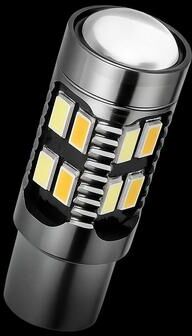
Drop Dash Deals LED DRL Switchback Turn Signal Bulbs Parking Light Indicators For Vehicles LED DRL Switchback Turn Signal Bulbs Parking Light Indicators For VehiclesUpgrade your vehicles lighting system with these 2pcs LED DRL switchback turn signal bulbs, designed to provide both style and functionality. Featuring a unique whiteamber design, these bulbs deliver brighter and more reliable performance compared...54,97 $*Shipping: 0,00 $Secure redirect to the provider



-
How do you calculate the damping factor?
The damping factor can be calculated by dividing the actual damping coefficient of a system by the critical damping coefficient. The critical damping coefficient is calculated by multiplying the mass of the system by the square root of the spring constant. Once you have both values, you can divide the actual damping coefficient by the critical damping coefficient to determine the damping factor of the system. A damping factor greater than 1 indicates an overdamped system, a factor of 1 represents critical damping, and a factor less than 1 signifies an underdamped system. **
-
When does the damping ratio apply to vibrations?
The damping ratio applies to vibrations when there is damping present in the system. Damping is a force that opposes the motion of the vibrating system, causing the amplitude of the vibrations to decrease over time. The damping ratio is a measure of how quickly the vibrations in the system decay. A higher damping ratio indicates faster decay of vibrations, while a lower damping ratio indicates slower decay. **
-
What is the difference between damping and suspension?
Damping refers to the process of controlling the oscillations and vibrations in a vehicle by dissipating the kinetic energy. This is typically achieved through the use of shock absorbers or dampers. On the other hand, suspension refers to the system that supports the vehicle and its load, providing a smooth and controlled ride over uneven surfaces. The suspension system includes components such as springs, struts, and control arms, which work together to absorb shocks and maintain stability. In summary, damping is a specific aspect of the suspension system that focuses on controlling vibrations and oscillations, while suspension encompasses the entire system that supports the vehicle and provides a comfortable ride. **
-
What unit does damping have in harmonic oscillation?
Damping in harmonic oscillation is typically measured in units of velocity per unit of displacement, or in units of force per unit of velocity. This is because damping represents the rate at which the oscillation's energy is dissipated, which can be quantified in terms of the velocity or force acting on the oscillating system. Therefore, the unit of damping depends on the specific context and the physical quantities involved in the oscillation. **


What is a frequency-dependent damping multiswitch by Kathrein?
A frequency-dependent damping multiswitch by Kathrein is a device used in satellite and cable TV systems to distribute signals to multiple receivers. It is designed to minimize signal loss and interference by adjusting the damping level based on the frequency of the signal being transmitted. This helps to ensure that each receiver receives a strong and clear signal, improving overall system performance. The multiswitch is a crucial component in ensuring reliable and high-quality signal distribution in multi-dwelling units or commercial buildings. **
How can one determine the damping factor from a diagram?
The damping factor can be determined from a diagram by examining the decay of the oscillations in the system. If the oscillations decay quickly, the system has a high damping factor, indicating strong damping. If the oscillations decay slowly, the system has a low damping factor, indicating weak damping. The damping factor can also be calculated by measuring the amplitude of the oscillations at different time intervals and using the logarithmic decrement formula. **
Top-Angebote
Products related to Damping:
-
Learning Resources Boxineers Cardboard Vehicles: Transform Boxes INTO Vehicles! (Mix & Match 75+ Reusable Pieces!) - Ages 5+ - Educational Toy Learning ResourcesMAKE YOUR OWN CARDBOARD VEHICLES: Turn any cardboard box into pretend play creations, from planes to monster trucks and more; build your vehicle with the kids tool set and customise your ride HANDS-ON LEARNING: Build STEM skills like engineering and experimenting, express creativity through pretend play, and develop fine motor skills with the cardboard craft tools, all through building REUSABLE KIT: The cardboard crafting supplies in this art kit are reusable, so kids can use them over and over again; remember to reuse or recycle your upcycled cardboard crafts when you're done MESS FREE CARDBOARD CRAFT KIT INCLUDES: Kid-safe screwdriver and hole punch tools, 30 bolts, six brackets, 40 reusable vehicle accessories, and six sticker sheets; boxes not included; for ages 5+ GIFTS FOR ARTISTIC KIDS: Our crafty construction sets make the perfect gifts for kids who love art, birthday gifts for girls and boys, holiday stocking stuffers, Easter basket toys, and more19,99 £*Shipping: 2,99 £Secure redirect to the provider
-
Red Shed Marvellous Vehicles: James May's illustrated non-fiction children's book on vehicles and things that move: Book 3 (Little Experts)Hit the road with writer and broadcaster JAMES MAY to discover incredible human-powered vehicles – from bicycles and submarines to amphibious vehicles and even a helicopter. Yes, really! Packed with fun, facts and challenges – perfect for readers aged 6 to 9. Welcome to LITTLE EXPERTS – inspiring the next generation of experts! • Written by expert authors, famous for their passion and expertise • Must-read introductions to key non-fiction topics with vibrant, colour illustrations throughout • Created to empower and inspire!4,95 £*Shipping: 1,99 £Secure redirect to the provider
-
Chesapeake Briony Sage Vehicles Wallpaper - 20.9 x 396 x 0.025This playful wallpaper is sure to add a bit of fun to your little one's space! Sage green helicopters, fire trucks, cars and cranes are printed against a crisp white. Briony is an unpasted, non woven wallpaper.89,99 $*Shipping: 0,00 $Secure redirect to the provider
-
What is the difference between damping factor and damping mass?
Damping factor is a measure of how effectively a system can dissipate energy, and it is typically represented as a ratio of the actual damping in a system to the critical damping. Damping mass, on the other hand, refers to the mass that is used to dissipate energy in a system, such as in a vibration damping system. In other words, damping factor is a measure of the effectiveness of the damping in a system, while damping mass is the physical mass that is used to provide damping in a system. **
-
What is the damping factor?
The damping factor is a parameter used in engineering and physics to describe the rate at which oscillations in a system decay over time. It is a measure of how quickly the system returns to equilibrium after being disturbed. A higher damping factor indicates faster decay of oscillations, leading to a quicker stabilization of the system. In contrast, a lower damping factor results in slower decay of oscillations, potentially leading to prolonged oscillations or even instability in the system. **
-
How do you calculate the damping factor?
The damping factor can be calculated by dividing the actual damping coefficient of a system by the critical damping coefficient. The critical damping coefficient is calculated by multiplying the mass of the system by the square root of the spring constant. Once you have both values, you can divide the actual damping coefficient by the critical damping coefficient to determine the damping factor of the system. A damping factor greater than 1 indicates an overdamped system, a factor of 1 represents critical damping, and a factor less than 1 signifies an underdamped system. **
-
When does the damping ratio apply to vibrations?
The damping ratio applies to vibrations when there is damping present in the system. Damping is a force that opposes the motion of the vibrating system, causing the amplitude of the vibrations to decrease over time. The damping ratio is a measure of how quickly the vibrations in the system decay. A higher damping ratio indicates faster decay of vibrations, while a lower damping ratio indicates slower decay. **
Similar search terms for Damping
-
Chesapeake Briony Blue Vehicles Wallpaper - 20.9 x 396 x 0.025Add a bit of adventure to your little one's space with this graphic print! Fire trucks, helicopters, cranes, and cars are printed in white against a blue background. Briony is an unpasted, non woven wallpaper.87,99 $*Shipping: 0,00 $Secure redirect to the provider
-
Drop Dash Deals LED DRL Switchback Turn Signal Bulbs Parking Light Indicators For Vehicles LED DRL Switchback Turn Signal Bulbs Parking Light Indicators For VehiclesUpgrade your vehicles lighting system with these 2pcs LED DRL switchback turn signal bulbs, designed to provide both style and functionality. Featuring a unique whiteamber design, these bulbs deliver brighter and more reliable performance compared...54,97 $*Shipping: 0,00 $Secure redirect to the provider
-
Drop Dash Deals Truck Lite Halogen Bulb High Performance Lighting For Trucks And Vehicles Truck Lite Halogen Bulb High Performance Lighting For Trucks And VehiclesWhen you're driving at night or in poor visibility, a reliable light source can make all the difference. The 1 pc of TruckLite 80571 Halogen Bulb is designed for truck and vehicle owners who value safety and clarity on the road. This highperformance...39,97 $*Shipping: 0,00 $Secure redirect to the provider
-
Everyday Crate 840LM LED Reverse Lights Pair T15 LED Brake & Backup Bulbs For Vehicles 840LM LED Reverse Lights Pair T15 LED Brake & Backup Bulbs For VehiclesDrive with greater confidence every time you reverse or brake. These LED 2pcs reverse lights are designed for drivers who want brighter visibility, faster response times, and improved road safety. Featuring 18 highquality LED chips per bulb, they...34,97 $*Shipping: 0,00 $Secure redirect to the provider
-
What is the difference between damping and suspension?
Damping refers to the process of controlling the oscillations and vibrations in a vehicle by dissipating the kinetic energy. This is typically achieved through the use of shock absorbers or dampers. On the other hand, suspension refers to the system that supports the vehicle and its load, providing a smooth and controlled ride over uneven surfaces. The suspension system includes components such as springs, struts, and control arms, which work together to absorb shocks and maintain stability. In summary, damping is a specific aspect of the suspension system that focuses on controlling vibrations and oscillations, while suspension encompasses the entire system that supports the vehicle and provides a comfortable ride. **
-
What unit does damping have in harmonic oscillation?
Damping in harmonic oscillation is typically measured in units of velocity per unit of displacement, or in units of force per unit of velocity. This is because damping represents the rate at which the oscillation's energy is dissipated, which can be quantified in terms of the velocity or force acting on the oscillating system. Therefore, the unit of damping depends on the specific context and the physical quantities involved in the oscillation. **
-
What is a frequency-dependent damping multiswitch by Kathrein?
A frequency-dependent damping multiswitch by Kathrein is a device used in satellite and cable TV systems to distribute signals to multiple receivers. It is designed to minimize signal loss and interference by adjusting the damping level based on the frequency of the signal being transmitted. This helps to ensure that each receiver receives a strong and clear signal, improving overall system performance. The multiswitch is a crucial component in ensuring reliable and high-quality signal distribution in multi-dwelling units or commercial buildings. **
-
How can one determine the damping factor from a diagram?
The damping factor can be determined from a diagram by examining the decay of the oscillations in the system. If the oscillations decay quickly, the system has a high damping factor, indicating strong damping. If the oscillations decay slowly, the system has a low damping factor, indicating weak damping. The damping factor can also be calculated by measuring the amplitude of the oscillations at different time intervals and using the logarithmic decrement formula. **
* All prices are inclusive of VAT and, if applicable, plus shipping costs. The offer information is based on the details provided by the respective shop and is updated through automated processes. Real-time updates do not occur, so deviations can occur in individual cases. ** Note: Parts of this content were created by AI.