Buy webleasing.eu ?
We are moving the project
webleasing.eu .
Are you interested in purchasing the domain
webleasing.eu ?
domain@kv-gmbh.de · 0541-91531010
Buy webleasing.eu ?
Are photons electrons?
No, photons are not electrons. Photons are elementary particles that make up light and electromagnetic radiation, while electrons are negatively charged subatomic particles that are part of atoms. Photons have no mass and travel at the speed of light, while electrons have mass and are bound to the nucleus of an atom. **
What happens to photons?
Photons are elementary particles that make up light. They do not have mass and travel at the speed of light. When photons interact with matter, they can be absorbed, reflected, or transmitted. Absorption of photons can result in the excitation of electrons, leading to various physical and chemical processes. **


Similar search terms for Photons
Top-Angebote
Products related to Photons:
-
Chesapeake Briony Sage Vehicles Wallpaper - 20.9 x 396 x 0.025This playful wallpaper is sure to add a bit of fun to your little one's space! Sage green helicopters, fire trucks, cars and cranes are printed against a crisp white. Briony is an unpasted, non woven wallpaper.89,99 $*Shipping: 0,00 $Secure redirect to the provider
-
Chesapeake Briony Blue Vehicles Wallpaper - 20.9 x 396 x 0.025Add a bit of adventure to your little one's space with this graphic print! Fire trucks, helicopters, cranes, and cars are printed in white against a blue background. Briony is an unpasted, non woven wallpaper.87,99 $*Shipping: 0,00 $Secure redirect to the provider
-
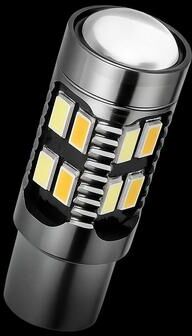
Drop Dash Deals LED DRL Switchback Turn Signal Bulbs Parking Light Indicators For Vehicles LED DRL Switchback Turn Signal Bulbs Parking Light Indicators For VehiclesUpgrade your vehicles lighting system with these 2pcs LED DRL switchback turn signal bulbs, designed to provide both style and functionality. Featuring a unique whiteamber design, these bulbs deliver brighter and more reliable performance compared...54,97 $*Shipping: 0,00 $Secure redirect to the provider



-
How are photons created?
Photons are created through a process called electromagnetic radiation. This occurs when an atom absorbs energy, causing its electrons to move to a higher energy level. When the electrons return to their original energy level, they release the absorbed energy in the form of photons. This process can happen in various ways, such as through thermal radiation, chemical reactions, or nuclear reactions. **
-
How can one convert the energy of different photons into monochromatic photons?
One way to convert the energy of different photons into monochromatic photons is through a process called frequency doubling or second harmonic generation. This involves passing the photons through a nonlinear crystal, which causes the photons to combine and create new photons with double the frequency and half the wavelength of the original photons. This results in monochromatic photons with a single, specific wavelength. Another method is through the use of filters or monochromators, which can selectively filter out photons of specific wavelengths, allowing only monochromatic photons to pass through. **
-
How can photons have mass?
Photons are massless particles according to the Standard Model of particle physics. They travel at the speed of light and have zero rest mass. However, in certain theoretical models beyond the Standard Model, such as some versions of string theory, it is possible for photons to acquire a small amount of mass through interactions with other particles or fields. This mass is typically very small and has not been experimentally observed. **
-
How far do photons travel?
Photons, as particles of light, travel at the speed of light in a vacuum, which is approximately 299,792 kilometers per second. This means that photons can travel vast distances in a very short amount of time. However, their travel distance can be affected by factors such as absorption, reflection, and scattering, which can cause them to be absorbed or redirected before reaching their destination. **


What distinguishes photons and protons?
Photons are elementary particles that carry electromagnetic radiation, such as light, while protons are subatomic particles found in the nucleus of an atom. Photons have no mass and travel at the speed of light, while protons have mass and are composed of quarks. Additionally, photons do not have an electric charge, while protons have a positive electric charge. **
Why can photons penetrate matter?
Photons can penetrate matter because they do not have an electric charge and are not affected by electromagnetic forces within the material. Additionally, photons do not have mass, allowing them to travel at the speed of light and pass through matter without being absorbed or deflected. This property of photons enables them to interact with atoms and molecules in the material, leading to phenomena such as absorption, reflection, and transmission. **
Top-Angebote
Products related to Photons:
-
Learning Resources Boxineers Cardboard Vehicles: Transform Boxes INTO Vehicles! (Mix & Match 75+ Reusable Pieces!) - Ages 5+ - Educational Toy Learning ResourcesMAKE YOUR OWN CARDBOARD VEHICLES: Turn any cardboard box into pretend play creations, from planes to monster trucks and more; build your vehicle with the kids tool set and customise your ride HANDS-ON LEARNING: Build STEM skills like engineering and experimenting, express creativity through pretend play, and develop fine motor skills with the cardboard craft tools, all through building REUSABLE KIT: The cardboard crafting supplies in this art kit are reusable, so kids can use them over and over again; remember to reuse or recycle your upcycled cardboard crafts when you're done MESS FREE CARDBOARD CRAFT KIT INCLUDES: Kid-safe screwdriver and hole punch tools, 30 bolts, six brackets, 40 reusable vehicle accessories, and six sticker sheets; boxes not included; for ages 5+ GIFTS FOR ARTISTIC KIDS: Our crafty construction sets make the perfect gifts for kids who love art, birthday gifts for girls and boys, holiday stocking stuffers, Easter basket toys, and more19,99 £*Shipping: 2,99 £Secure redirect to the provider
-
Red Shed Marvellous Vehicles: James May's illustrated non-fiction children's book on vehicles and things that move: Book 3 (Little Experts)Hit the road with writer and broadcaster JAMES MAY to discover incredible human-powered vehicles – from bicycles and submarines to amphibious vehicles and even a helicopter. Yes, really! Packed with fun, facts and challenges – perfect for readers aged 6 to 9. Welcome to LITTLE EXPERTS – inspiring the next generation of experts! • Written by expert authors, famous for their passion and expertise • Must-read introductions to key non-fiction topics with vibrant, colour illustrations throughout • Created to empower and inspire!4,95 £*Shipping: 1,99 £Secure redirect to the provider
-
Chesapeake Briony Sage Vehicles Wallpaper - 20.9 x 396 x 0.025This playful wallpaper is sure to add a bit of fun to your little one's space! Sage green helicopters, fire trucks, cars and cranes are printed against a crisp white. Briony is an unpasted, non woven wallpaper.89,99 $*Shipping: 0,00 $Secure redirect to the provider
-
Are photons electrons?
No, photons are not electrons. Photons are elementary particles that make up light and electromagnetic radiation, while electrons are negatively charged subatomic particles that are part of atoms. Photons have no mass and travel at the speed of light, while electrons have mass and are bound to the nucleus of an atom. **
-
What happens to photons?
Photons are elementary particles that make up light. They do not have mass and travel at the speed of light. When photons interact with matter, they can be absorbed, reflected, or transmitted. Absorption of photons can result in the excitation of electrons, leading to various physical and chemical processes. **
-
How are photons created?
Photons are created through a process called electromagnetic radiation. This occurs when an atom absorbs energy, causing its electrons to move to a higher energy level. When the electrons return to their original energy level, they release the absorbed energy in the form of photons. This process can happen in various ways, such as through thermal radiation, chemical reactions, or nuclear reactions. **
-
How can one convert the energy of different photons into monochromatic photons?
One way to convert the energy of different photons into monochromatic photons is through a process called frequency doubling or second harmonic generation. This involves passing the photons through a nonlinear crystal, which causes the photons to combine and create new photons with double the frequency and half the wavelength of the original photons. This results in monochromatic photons with a single, specific wavelength. Another method is through the use of filters or monochromators, which can selectively filter out photons of specific wavelengths, allowing only monochromatic photons to pass through. **
Similar search terms for Photons
-
Chesapeake Briony Blue Vehicles Wallpaper - 20.9 x 396 x 0.025Add a bit of adventure to your little one's space with this graphic print! Fire trucks, helicopters, cranes, and cars are printed in white against a blue background. Briony is an unpasted, non woven wallpaper.87,99 $*Shipping: 0,00 $Secure redirect to the provider
-
Drop Dash Deals LED DRL Switchback Turn Signal Bulbs Parking Light Indicators For Vehicles LED DRL Switchback Turn Signal Bulbs Parking Light Indicators For VehiclesUpgrade your vehicles lighting system with these 2pcs LED DRL switchback turn signal bulbs, designed to provide both style and functionality. Featuring a unique whiteamber design, these bulbs deliver brighter and more reliable performance compared...54,97 $*Shipping: 0,00 $Secure redirect to the provider
-
Drop Dash Deals Truck Lite Halogen Bulb High Performance Lighting For Trucks And Vehicles Truck Lite Halogen Bulb High Performance Lighting For Trucks And VehiclesWhen you're driving at night or in poor visibility, a reliable light source can make all the difference. The 1 pc of TruckLite 80571 Halogen Bulb is designed for truck and vehicle owners who value safety and clarity on the road. This highperformance...39,97 $*Shipping: 0,00 $Secure redirect to the provider
-
Everyday Crate 840LM LED Reverse Lights Pair T15 LED Brake & Backup Bulbs For Vehicles 840LM LED Reverse Lights Pair T15 LED Brake & Backup Bulbs For VehiclesDrive with greater confidence every time you reverse or brake. These LED 2pcs reverse lights are designed for drivers who want brighter visibility, faster response times, and improved road safety. Featuring 18 highquality LED chips per bulb, they...34,97 $*Shipping: 0,00 $Secure redirect to the provider
-
How can photons have mass?
Photons are massless particles according to the Standard Model of particle physics. They travel at the speed of light and have zero rest mass. However, in certain theoretical models beyond the Standard Model, such as some versions of string theory, it is possible for photons to acquire a small amount of mass through interactions with other particles or fields. This mass is typically very small and has not been experimentally observed. **
-
How far do photons travel?
Photons, as particles of light, travel at the speed of light in a vacuum, which is approximately 299,792 kilometers per second. This means that photons can travel vast distances in a very short amount of time. However, their travel distance can be affected by factors such as absorption, reflection, and scattering, which can cause them to be absorbed or redirected before reaching their destination. **
-
What distinguishes photons and protons?
Photons are elementary particles that carry electromagnetic radiation, such as light, while protons are subatomic particles found in the nucleus of an atom. Photons have no mass and travel at the speed of light, while protons have mass and are composed of quarks. Additionally, photons do not have an electric charge, while protons have a positive electric charge. **
-
Why can photons penetrate matter?
Photons can penetrate matter because they do not have an electric charge and are not affected by electromagnetic forces within the material. Additionally, photons do not have mass, allowing them to travel at the speed of light and pass through matter without being absorbed or deflected. This property of photons enables them to interact with atoms and molecules in the material, leading to phenomena such as absorption, reflection, and transmission. **
* All prices are inclusive of VAT and, if applicable, plus shipping costs. The offer information is based on the details provided by the respective shop and is updated through automated processes. Real-time updates do not occur, so deviations can occur in individual cases. ** Note: Parts of this content were created by AI.